
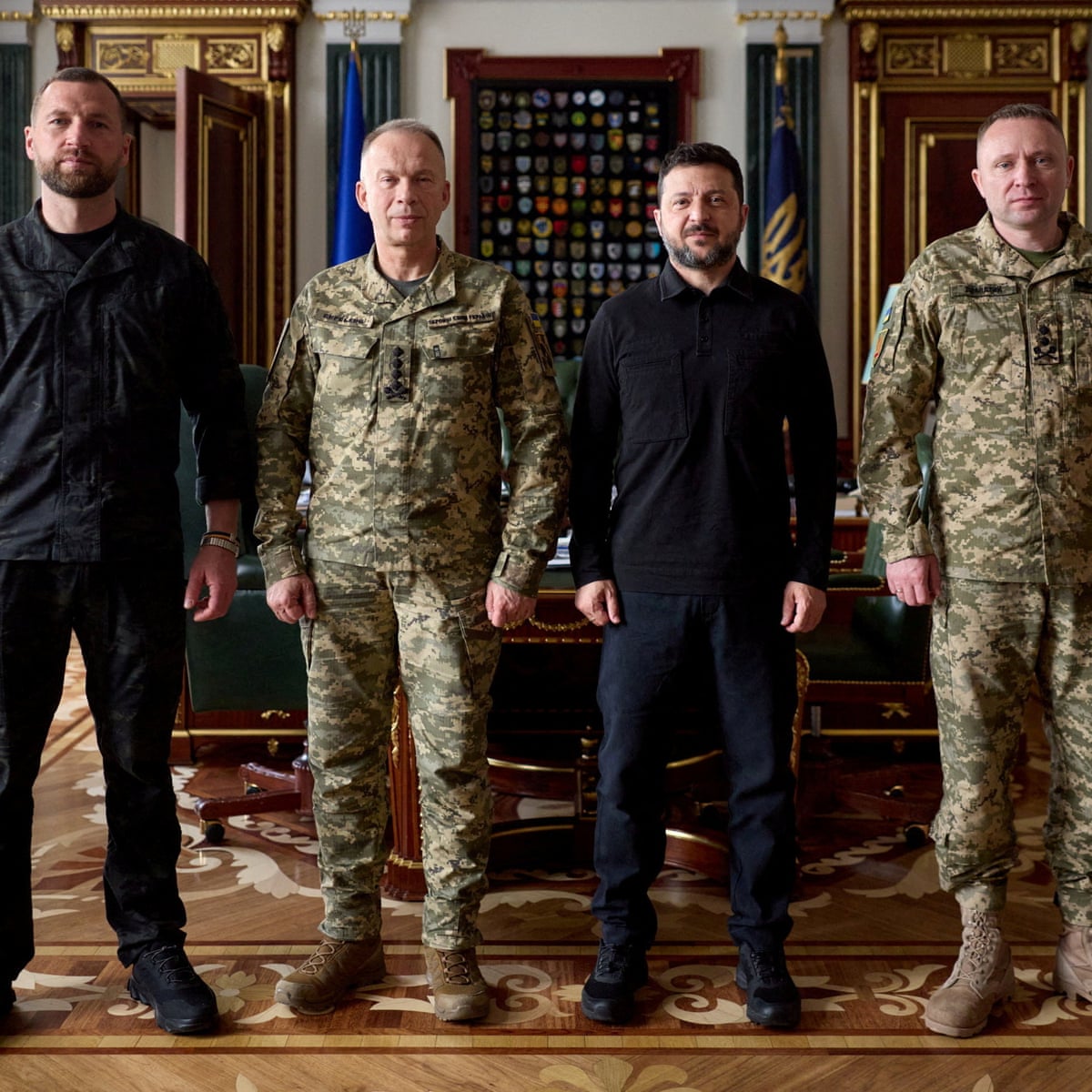
Volodymyr Zelenskyy is caught in a political storm as protesters demand the reinstatement of Mykhailo Fedorov as Ukraine's defence minister. After sacking Fedorov last week, Zelenskyy has attempted to placate public outrage by offering him a new government role, but Fedorov has turned it down. The president is now locked in a standoff with both his former minister and the demonstrators.
Zelenskyy’s move to remove Oleksandr Syrskyi from his role as commander-in-chief and replace him with Mykhailo Drapatyi came after rising tensions between Syrskyi, a veteran Soviet-trained general, and the tech-savvy Fedorov, who spearheaded the modernisation of Ukraine’s armed forces. The reshuffle was presented as a necessary adjustment to streamline command and prepare for new offensives.
Fedorov, however, sees the removal as a personal betrayal of his reform agenda. He insists that only by returning to the defence ministry can he continue his plans to modernise the military. He has rebuffed a new role in the government, reportedly rejecting the position of deputy prime minister for technological development. Yevhenii Khmara now serves as acting minister, but this interim appointment has not satisfied the protest movement.
Public pressure escalates
Protesters, led by veterans and activists, have vowed to continue demonstrations until Fedorov is reinstated. A rally is planned for Friday evening in Kyiv's Ivana Franka Square, a direct confrontation with the presidential office. Dmytro Koziatynsky, a prominent veteran, reiterated the movement's demands on social media, calling for the government to listen to the will of the people.
Inside the military, the new leadership faces immediate challenges. Drapatyi, the new commander-in-chief, has been tasked with intensifying offensive operations across all domains. He outlined a directive to push deeper into enemy territory, accelerate drone development, and enhance the military's technological capabilities. His appointment has been met with widespread approval, with former president Petro Poroshenko calling him a 'strategically minded' and 'decisive' leader.
The broader context of the reshuffle
The sacking of both Fedorov and Syrskyi is the result of a generational clash within the military leadership. Fedorov, 35, represented a new wave of digital and drone-focused warfare, while Syrskyi, 60, embodied a more traditional, Soviet-era command structure. Zelenskyy claimed he tried to mediate between the two before removing Fedorov as a last resort. In his farewell message, Syrskyi defended his legacy, including Kyiv's and Kharkiv's defense during the 2022 invasion and the creation of the world's first dedicated drone branch.
In the coming weeks, Drapatyi will face the challenge of maintaining momentum against Russian forces, particularly as Moscow may introduce a mobilisation after its September elections. Ukrainian drones have already hit key economic targets in Russia, including oil refineries and storage facilities.
Despite the internal turmoil, Russian bloggers have noted Drapatyi’s rise as a potential threat, describing him as 'smart, strong, and hate[ful] of Russia.' They also highlighted that such rapid promotion is uncommon in the Russian military, where loyalty and connections often determine advancement. The Kremlin has meanwhile downplayed the impact of the leadership change, insisting it will not alter the frontline situation.