
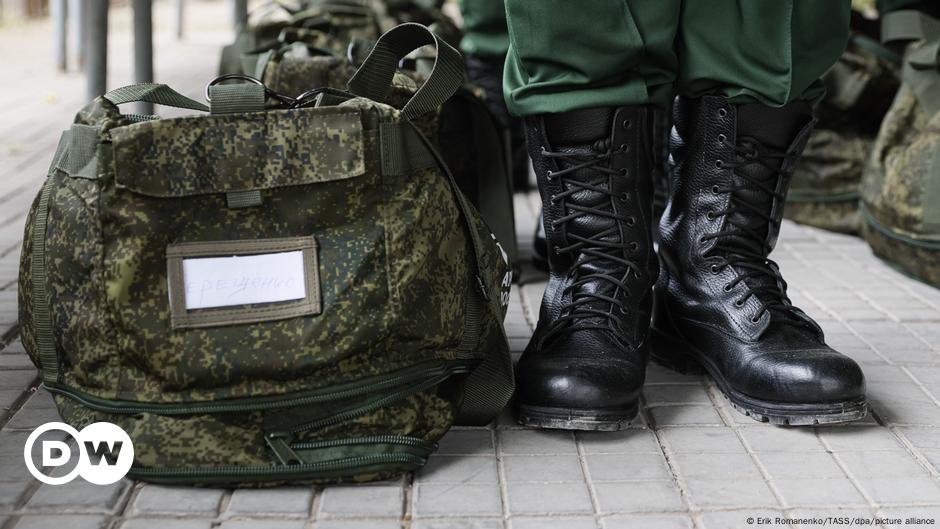
Nikita Zvezdov's life changed abruptly when he turned 18, just months after being expelled from his vocational school in Krasnoyarsk. The sequence of events, he believes, was deliberate. In recent years, stories have emerged about Russian students being denied academic success to ease their conscription into the military. These allegations, while not verified, align with the timeline of Zvezdov's own experience. The sudden expulsion left him vulnerable to the draft, which he received shortly after his 18th birthday. He was thrust into a system that demanded obedience and resilience, and he had little time to process the transition.
Zvezdov was assigned to a military unit in Ussuriysk, a location infamous for its dangers and misconduct. Officers in the unit subjected conscripts to harsh treatment, including physical abuse and excessive training demands. The young soldier endured beatings, threats, and degrading tasks, such as doing 200 pushups in a gas mask or running 50 laps while wearing a bulletproof vest and carrying 25 to 30 kilograms. The pressure to extend his service was relentless. He found himself in a state of despair, even attempting to take his own life by jumping off a cliff, an act that was interrupted by military personnel. These experiences highlight the extreme conditions many Russian conscripts face.
Escaping across borders to seek refuge
Zvezdov’s opportunity to flee came after he received his first military paycheck of 40,000 rubles, which he used to secure his leave from the unit. Under the watch of a former convict assigned to monitor him, he managed to slip away and head to Armenia. The journey wasn't straightforward. From there, he traveled through Bosnia and Herzegovina and Croatia before finally reaching Germany in December 2025. Germany’s decision to host him was personal, as his grandfather lives there. His ultimate goal was to seek asylum, but the process was complex and uncertain.
Legal hurdles and political uncertainty
Germany's approach to asylum applications from Russian deserters has undergone a shift. While the previous left-leaning government had expressed a willingness to offer protection to deserters and conscientious objectors in 2022, recent policies have limited the chances of such applicants. The law, as interpreted by current authorities, takes precedence over political statements, leaving many in legal limbo. Alexey Kozlov of the Berlin-based organization Solidarus, which supports civil society in former Soviet states, explained that political rhetoric no longer influences the legal framework. The result is a system that offers little hope to individuals like Zvezdov.
Facing the consequences of a looming deadline
Zvezdov's asylum application in Germany faces a crucial deadline. Under the European Union’s Dublin rule, he must be returned to Croatia, the first country where he applied for asylum, within six months. That means he has until the end of July 2026 to resolve his case. If he is not repatriated to Croatia by then, Germany will be responsible for processing his asylum claim. However, the path to asylum in Germany is nearly closed for Russian deserters. Despite past government statements, current policies and legal standards make approvals unlikely. For Zvezdov, the reality is clear: he may not have a legal escape from his situation. If Germany turns him down, he could be forced to return to Croatia or, worse, be sent back to Russia, where his safety remains in question.
The experiences of Zvezdov reflect a broader issue affecting Russian conscripts. The military has seen widespread reports of coercion and mistreatment, and many have fled to avoid being sent to the front lines in Ukraine. His story underscores the difficult choices soldiers face in a conflict that has drained Russia of manpower and morale. For those like Zvezdov, fleeing is not just an option—it is often the only way to survive.
Zvezdov’s journey through the Balkans and into Germany is a microcosm of the struggles many face when trying to escape the draft. Each step involved risk, from navigating borders to evading detection. The lack of legal protection has forced him and others into a state of perpetual movement. With Germany’s asylum system offering little reprieve, the future remains uncertain. The only path left for Zvezdov and others like him is to keep running, even as time runs short and the stakes continue to rise.
The international community continues to watch the situation unfold. Human rights groups have raised concerns about the treatment of Russian deserters and the legal barriers they face. While political rhetoric may shift, the law remains fixed. For now, Zvezdov’s fate is tied to the outcome of a system that is unlikely to offer him the protection he seeks. As the deadline nears, the question is not whether he can stay in Germany, but whether he can avoid being sent back to a war where his survival is uncertain.