
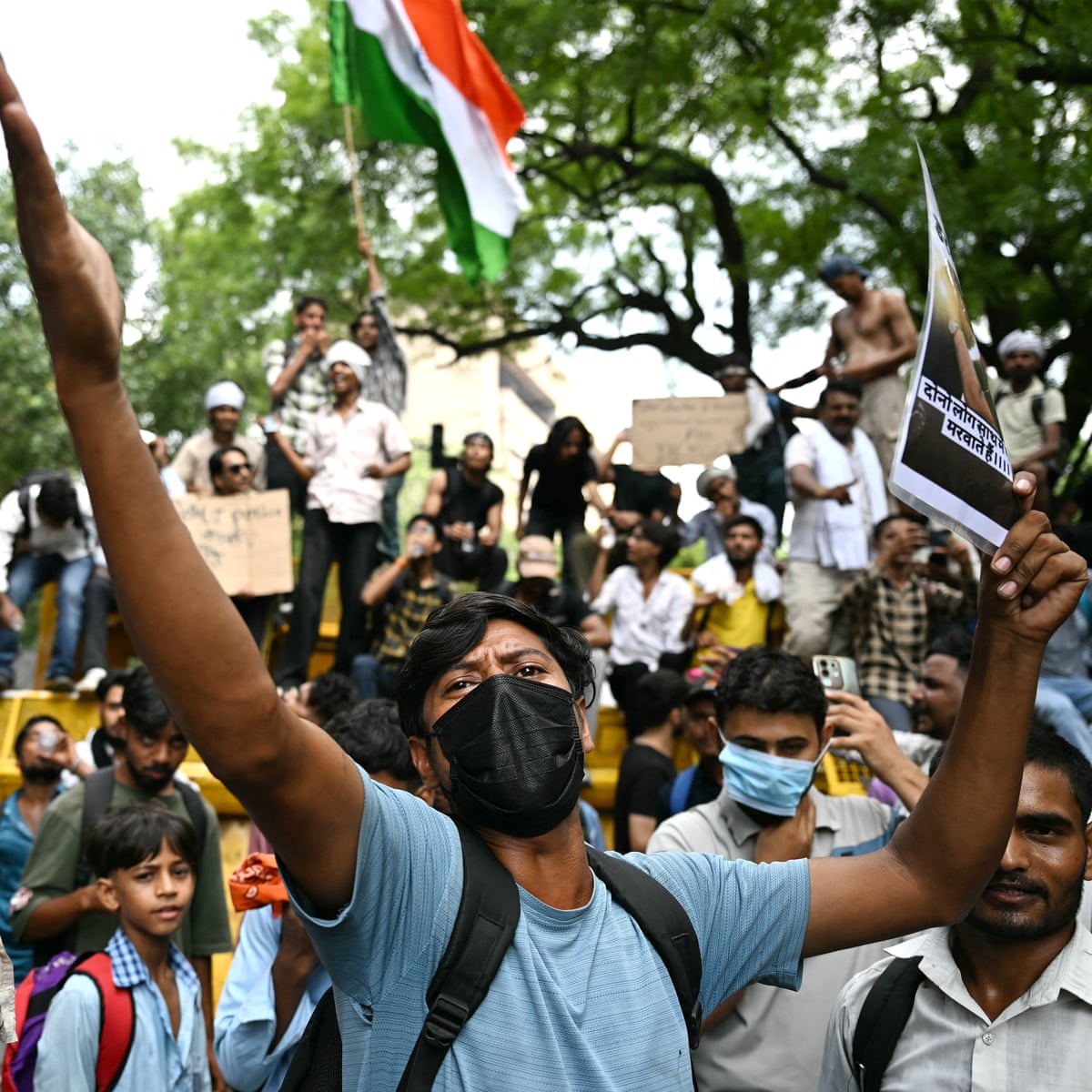
Prime Minister Narendra Modi announced the creation of 'fast track courts' to speed up the punishment of corrupt officials involved in leaking examination papers, a key issue fueling the ongoing youth-led protests in Delhi. His statement came in direct response to the 'cockroach' protest movement, which has drawn widespread anger at the government's failure to address systemic corruption in India's education system.
Modi's pledge of expedited justice, faster than the often-decade-long legal process in India, was swiftly dismissed by the satirically named Cockroach Janta party (CJP), the youth-led movement behind the protests. The group has made clear that their core demand remains unchanged: the resignation of Education Minister Dharmendra Pradhan.
Protesters Defy Police Crackdowns
Despite police denying them the right to march toward parliament, an estimated 50,000 protesters took to the streets of Delhi on Monday. Police responded with baton charges and tear gas. The crackdown intensified the resolve of the movement, which has continued to swell, with over 1,000 protesters still camped out at the Jantar Mantar protest site on Wednesday, even as high heat and humidity made the conditions grueling.
Many of these protesters had traveled long distances to stand in support of what they see as a national crisis in education. At the site, supporters have organized themselves into teams to distribute food and water, care for the heat-exhausted, and even offer refreshments to on-duty police.
Political Tensions Escalate
Opposition leader Rahul Gandhi, speaking at a press conference, demanded not only that Pradhan resign but also that Modi personally apologize for failing to reform the education system. He criticized the government for failing to secure even one conviction in 152 documented cases of exam paper leaks over the past decade.
Meanwhile, CJP founder Abhijeet Dipke made it clear that the movement will not compromise. He stated that if the government genuinely wants to engage, ministers must come to the protest site and speak in public. A recent meeting between CJP leaders and Health Minister J. P. Nadda yielded no progress, further hardening the protesters' stance.