
Sitting on the porch of his home in Teshie, a town near Accra, Heavy J dipped a brush into red oil paint and carefully painted a drop of blood onto the blade of a knife on his canvas. It was part of a poster for Disney’s *The Little Mermaid*—but not as anyone might expect. At the top of the scene, he had begun painting a skull, a detail not found in the film’s plot. Still, it served its purpose. His work is part of a unique art form that once flourished across Ghana.
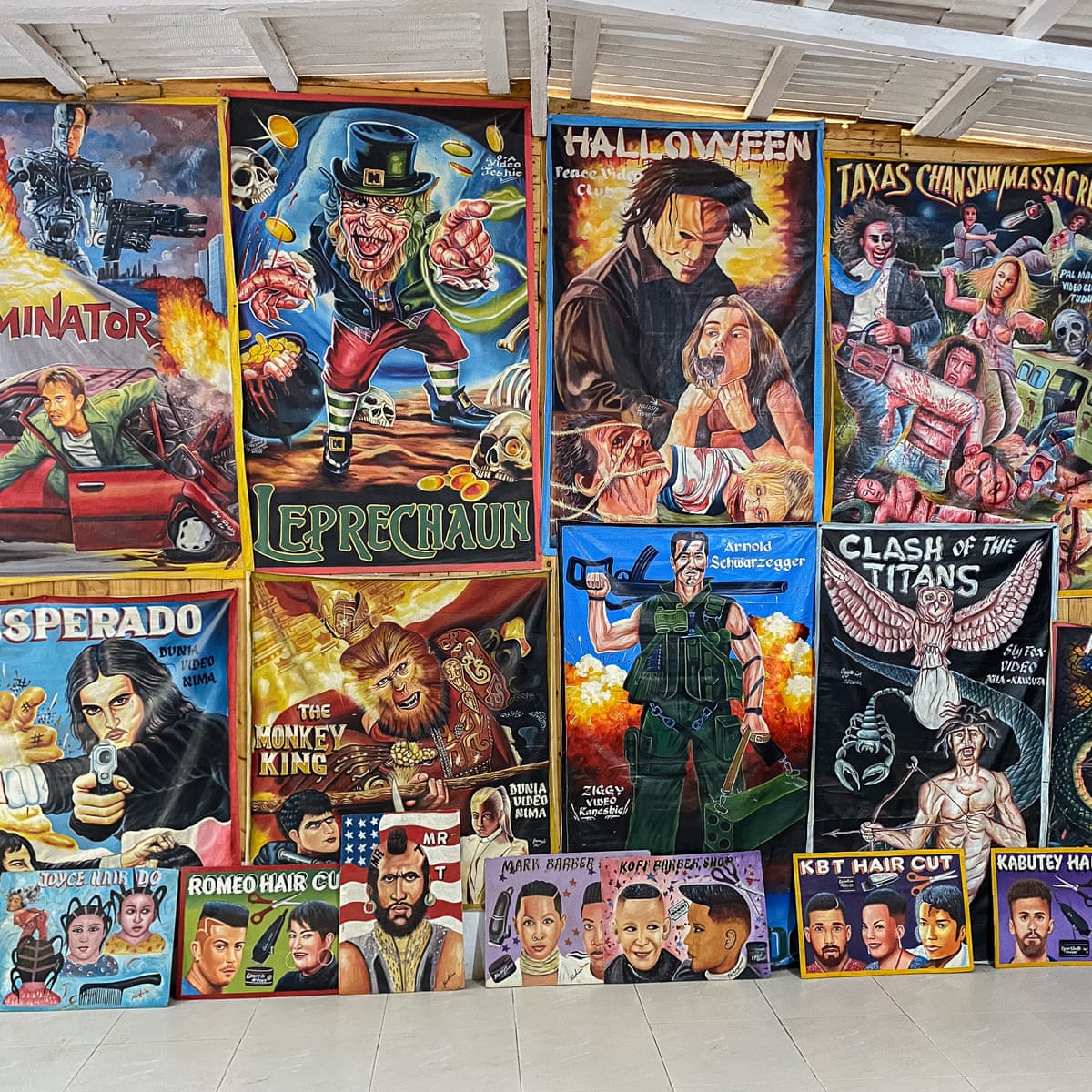
From the late 1970s to the early 2000s, hand-painted film posters were a defining feature of Ghana’s video club scene. These local venues, which showed foreign movies on VHS, often found that the original posters didn’t attract enough attention. So artists were commissioned to create new ones. The artists, working for different video clubs, competed to outdo each other with wild, exaggerated interpretations. They saw the film titles and basic plots as just starting points, then used humor, folklore, and fantasy to craft something entirely new.
As more Ghanaians gained access to electricity, home video players, and television in the early 2000s, the number of active video clubs dwindled. Many shuttered, and the artists who made the posters had to find other work. But the posters themselves became cultural artifacts. They started showing up in books, at international exhibitions, and in private collections. Some are now considered rare and valuable. A rekindled interest emerged in recent years, especially with the rise of online marketing and buyers in the West who collect them as art.
To support the tradition and meet the growing demand, Deadly Prey Gallery, a business co-founded in 2012 by Brian Chankin and Robert Kofi, has partnered with local artists. Chankin, a former video rental store owner in Chicago, and Kofi, who grew up in Winneba and once worked as a hype man for video centres, now connect artists with global customers. Most buyers are in the U.S. The most popular films are old action, sci-fi, and horror classics like *The Exorcist*, *Star Wars*, and *Terminator*. Prices start at $600 for commissioned work, depending on the size and details requested.
In Ashaiman, around 11 miles from Heavy J’s home, another artist named Stoger was working on two commissions. One was for the horror film *Poltergeist*, and the other for *Gummo*, an experimental drama known for its bizarre and violent scenes. Stoger, born Benjamin Amartey, painted three cats and a man in a bathtub with a plate of spaghetti. The poster diverged sharply from the film but captured the spirit of exaggeration that defines the style. Stoger, who previously worked as a sculptor, said he uses his imagination to make the scenes as eye-catching as possible, ensuring that people 'will love the poster.'
Kofi, who manages Deadly Prey Gallery from his base in Accra, is known for his exacting standards. During a visit to Stoger’s workspace, he offered feedback in Ga, the local language. He pointed out that two of the cats were not aggressive enough, and the spaghetti was too clean. 'And the spaghetti must be dirtier.' His guidance reflects the gallery’s commitment to maintaining the bold, striking style that makes these posters stand out.
The exaggerated style of these posters is not just artistic flair—it’s rooted in a broader African tradition called 'visualising the invisible.' Joseph Oduro-Frimpong, director of the Centre of African Popular Culture at Ashesi University and himself a collector of the posters, explains that the artists aren’t aiming for accuracy. Their audience has not seen the films, so they rely on imagination and local storytelling to create something that grabs attention. 'There is a kind of sensationalism to it.'
But not everyone appreciates the exaggerated approach. Some viewers, when confronted with these fantastical posters, have reacted negatively. In extreme cases, artists have faced threats, insults, and even physical attacks. Still, the artists keep creating. For them, the goal is not realism but impact. The posters are meant to draw people in, to spark curiosity, to tell a story of their own—however far from the actual film it may be.