
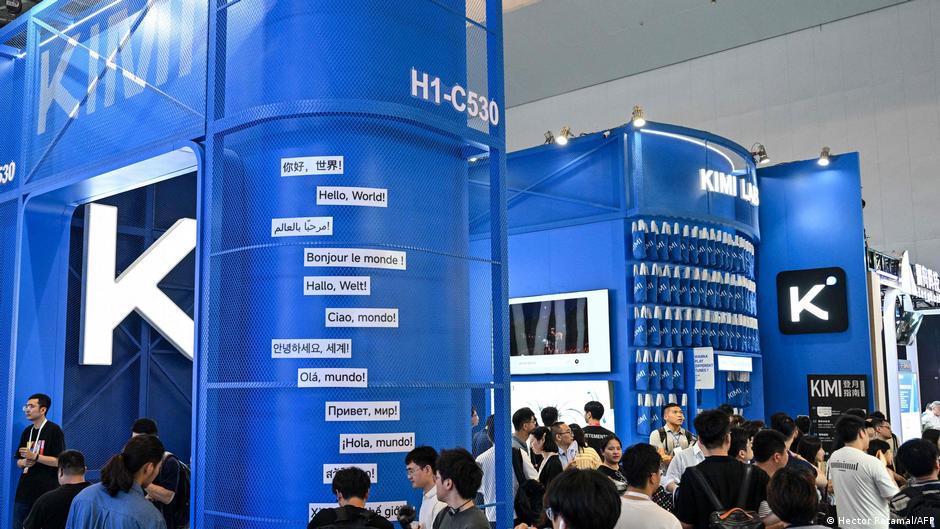
Moonshot AI's Kimi K3 Matches Anthropic's Claude
Chinese startup Moonshot AI recently introduced Kimi K3, a groundbreaking artificial intelligence model that stands up to Anthropic's top-performing system, Claude Fable 5, across several critical performance metrics. Notably, Kimi K3 achieves these results with far less computing power and significantly lower costs, as highlighted by global technology specialist Alvin W. Graylin. This achievement represents a major turning point in the global AI race, showcasing China's ability to innovate and compete on the world stage despite significant technical and strategic barriers.
Graylin noted that Kimi K3 'commoditizes frontier models,' meaning that the most advanced AI systems are becoming more accessible to a broad range of users. For the majority of customers, the small differences in knowledge between this model and the high-priced U.S. offerings are not significant enough to justify the much higher cost. This shift makes advanced AI not just a luxury but a practical tool for most businesses and government operations, significantly broadening its impact.
U.S. Threatens to Block Chinese AI Models
U.S. President Donald Trump has made it clear that his administration plans to prevent American users from accessing Chinese AI models. Treasury Secretary Scott Bessent has echoed this stance, suggesting the U.S. might impose sanctions on Chinese models due to accusations of intellectual property violations. American companies, including industry giants Anthropic and OpenAI, have accused Chinese labs of using their models to train their own systems through a technique known as distilling, which involves extracting knowledge from existing AI models to create new ones.
While distilling is a common practice in the field of artificial intelligence, the White House has raised alarms, labeling it as a form of large-scale knowledge harvesting. In response, China has dismissed the allegations as baseless, calling the accusations unfounded and accusing the U.S. of engaging in technological bullying to slow China's progress. This exchange highlights a growing conflict over the ethics and ownership of AI development, which could have far-reaching consequences for international relations and technological policy.
U.S. Closed Systems
Unlike China's increasingly open-source strategy, U.S. technology firms have traditionally kept their leading AI models closed, using them to generate revenue through subscriptions, business licensing, and pay-per-token models. This strategy maximizes profits for the companies but also creates barriers for broader adoption and innovation. Meanwhile, Chinese developers are opening their models to a much wider audience, allowing companies and researchers to download and modify them for their own needs and applications.
Graylin pointed out that U.S. restrictions on advanced microchips have forced Chinese developers to innovate in new and more efficient ways. This necessity has driven a creative approach to AI development in China. Research analyst Giulia Neaher provided a different perspective, suggesting that much of Kimi K3's success can be attributed to the immense talent, robust infrastructure, and financial investment behind its development. Neaher cautioned, however, that distilling is akin to rote learning, where high test scores do not necessarily reflect deep understanding. She compared the process to schools that focus only on exam preparation, rather than on fostering true comprehension and real-world application.
The U.S. remains focused on preserving its dominance in frontier AI, recognizing its potential to influence military capabilities, economic strength, and technological leadership in the years to come. Advanced AI systems can also accelerate breakthroughs in areas like scientific research and medical discoveries. As the competition intensifies, Washington is moving away from its previous hands-off approach to AI policy and preparing to respond more aggressively to China's growing influence in the field.
The AI rivalry is also expanding into new areas, such as the push to take successful AI firms public. U.S. companies like Anthropic and OpenAI are preparing for initial public offerings this year, capitalizing on the current surge in investor interest. On the other side of the world, Chinese startups DeepSeek and Moonshot AI are also seeking to go public, with Moonshot planning a listing in Hong Kong before the start of next year. These moves signal the beginning of a new chapter in the global AI competition, one that could shape the future of technology investment and market dynamics.