
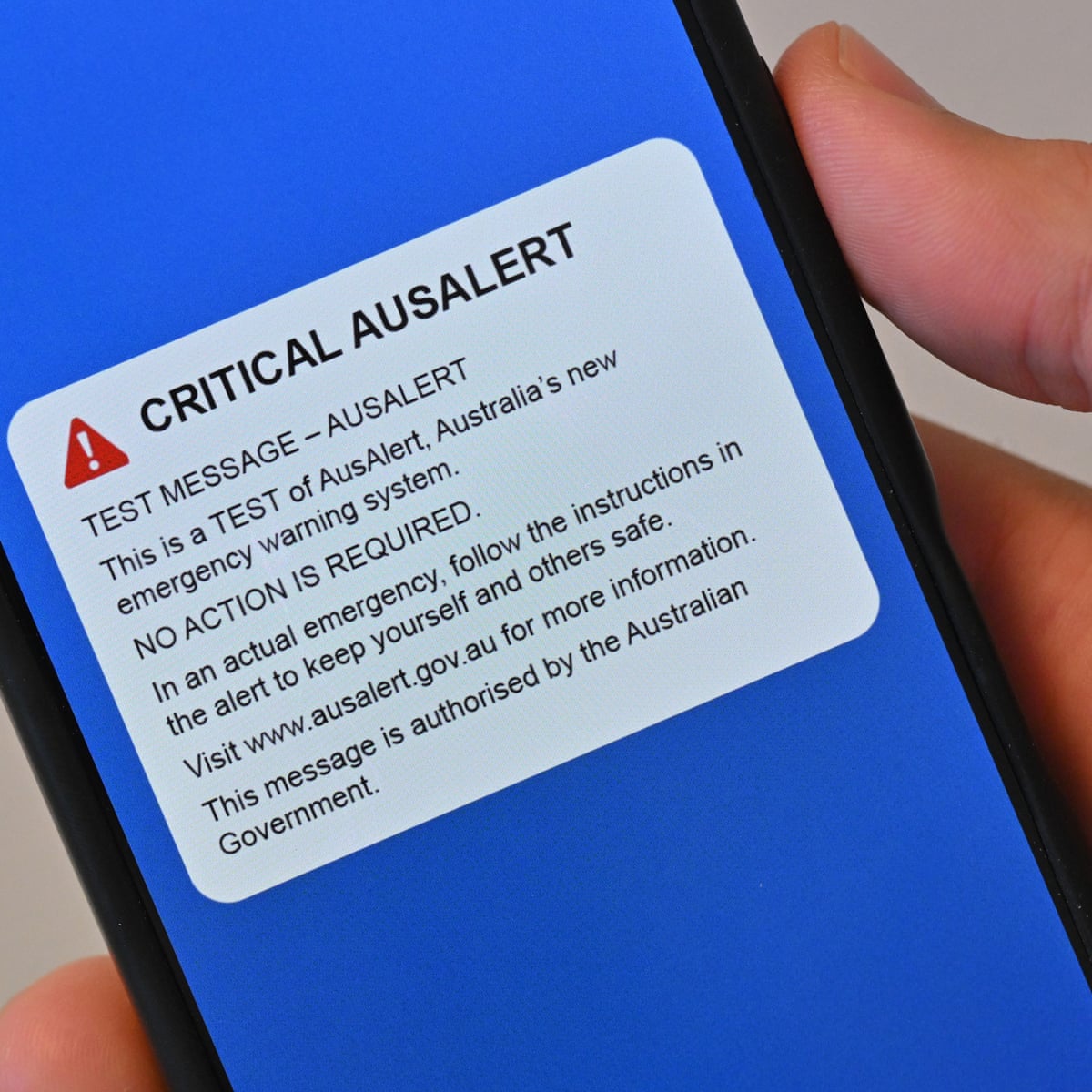
On the eve of a nationwide test, Kristy McBain, Australia’s minister for emergency management, said the upcoming trial of the AusAlert emergency warning system will help confirm its effectiveness in real-life crises. The test will occur on Monday afternoon.
During the trial, most phones in Australia will emit a 10-second siren and receive a test alert. This marks the first national test of AusAlert, a new warning system developed following recommendations from the 2020 Royal Commission into the Black Summer bushfires. The system is scheduled to go live in October, aiming to replace the existing SMS-based Emergency Alert system.
Despite the broad scope of the test, not every device will be affected. The National Emergency Management Agency (Nema) provided specific details: only devices meeting certain technical requirements will be included. These include iPhones 11 or newer with iOS 26.4 or later, Apple Watches Series 6 and beyond with watchOS 26.4 or later, and Android devices on Android 12 or later. Nema also noted that some older devices, Apple iPads, and non-Android or non-iOS phones might still receive the alert, but not all will.
The government is promoting the siren alert as an advancement in emergency communication. Yet, for some people, the alarm poses a different challenge. Domestic violence advocates have raised concerns that the siren could reveal “safe phones,” which are often hidden to protect individuals in dangerous situations. To avoid detection, survivors are being advised to power off their devices for 24 hours after the test.
Karen Bentley, CEO of Wesnet, a women’s services network, explained that many people experiencing abuse rely on a hidden phone as part of their safety strategy. She urged individuals with such devices to switch them off or put them into airplane mode at least one hour before the test and keep them off for a full day afterward.
Nema has taken steps to assist people using safe phones by creating a safety guide and working with family violence advocates to share the message. Pat Hetherington, Nema’s interim coordinator general, confirmed that phones in airplane mode or turned off will not receive the alert. He emphasized the importance of keeping these devices powered down for 24 hours.
While the federal government is pushing forward with the AusAlert system as a major step forward, some state leaders remain cautious. Queensland’s emergency services minister, Daniel Purdie, described the system as “potentially life-saving technology” but pointed out lingering concerns about coverage gaps.
Federal sources confirmed that AusAlert is working on ways to extend the system to landline phones and satellite-connected devices, but until those updates are in place, the current Emergency Alert system will continue to operate. McBain said both systems will be active during the high-risk weather season. States are not forced to adopt the new system immediately, but will have the option to keep using the current one.
The federal government has received some pushback from state leaders about the transition. Queensland, one of Australia’s most disaster-prone regions, has expressed worries about how the new system might impact rural communities where many depend on landlines for emergency warnings.
He emphasized the importance of collaboration between state and federal authorities to ensure the new system outperforms the existing one.
McBain defended the system, calling it a necessary evolution in emergency communication. She noted that the 2020 bushfire royal commission had made it clear that Australia’s current system lacks the reliability needed during crises. The push for a consistent and robust national alert system, she argued, is essential for saving lives in the future.