Amid new laws and executive orders, NRC commissioners were reshaped in 2025 amid a nuclear rulemaking surge, shifting the agency's focus to support next-generation nuclear technology while maintaining its commitment to safety. These changes reflect a broader strategy to align the agency's mission with evolving industry needs.
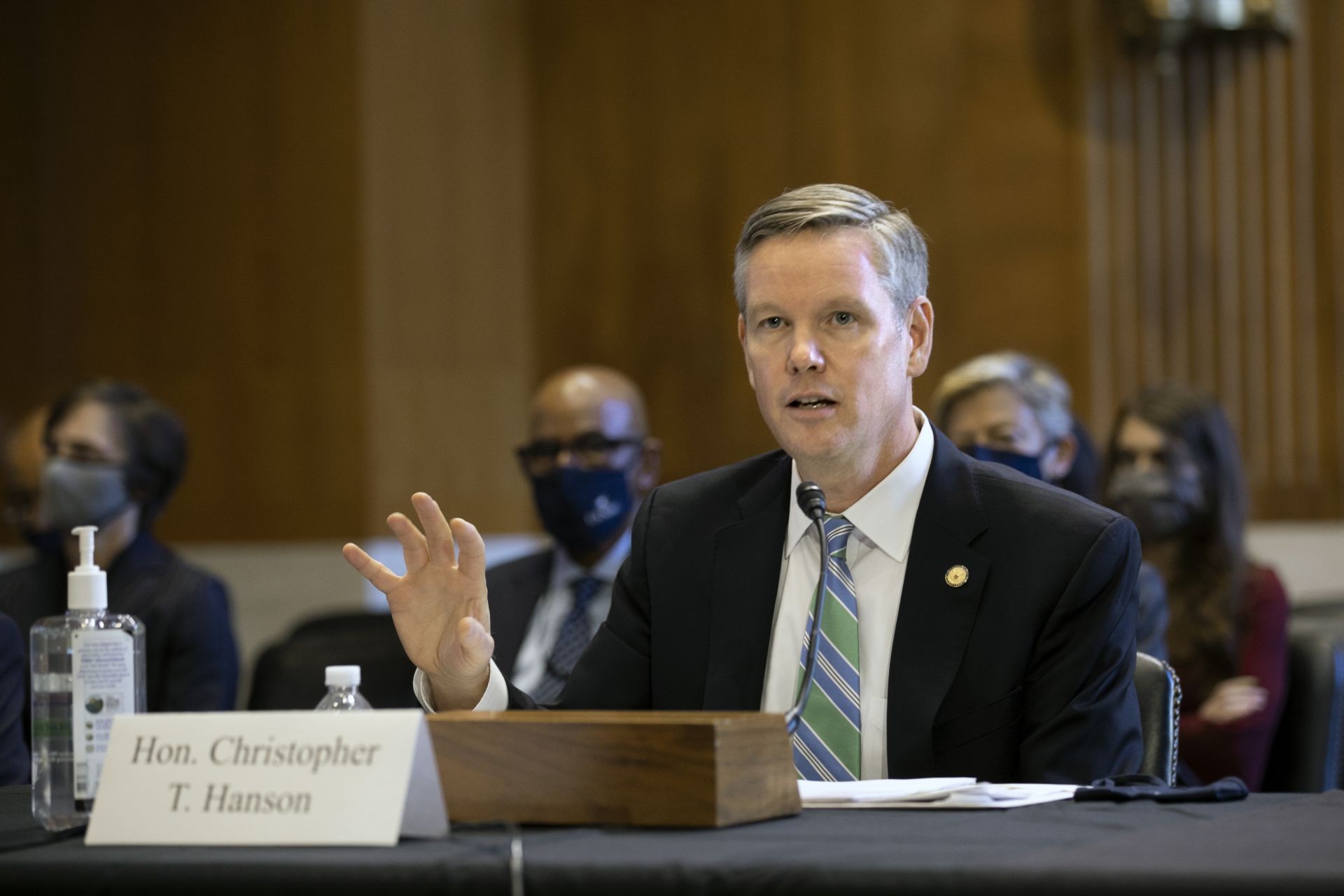
The year began with a wave of uncertainty. In May 2025, the Trump administration issued Executive Order 14300, which demanded a thorough revision of NRC regulations. The order required proposed rules to be drafted within nine months and finalized within 18 months. Just weeks later, on June 14, President Trump dismissed Chris Hanson, making it the first time in the NRC's history that a sitting commissioner had been removed from office.
Leadership and staffing upheaval
The turmoil continued following the dismissal of Chris Hanson. David Wright's term as chairman ended, though he was later reappointed. Concurrently, Commissioner Annie Caputo resigned in July, leaving the commission with only three members: Bradley Crowell, Matthew Marzano, and Wright. This configuration represented the minimum statutory quorum required for the agency to operate effectively.
The impact of these changes extended beyond the commission itself. Over the course of 2025, more than 500 staff members left the NRC, reducing its total workforce of approximately 2,800. Commissioner Crowell testified to Congress in December about these significant departures, highlighting the loss of key personnel, including the executive director for operations, the general counsel, and many senior technical experts.
New appointments and regulatory momentum
By late 2025, the NRC had successfully regained its full complement of five commissioners. Ho Nieh and Douglas Weaver joined the commission on December 4 and December 22, respectively. This marked the first time in over a year that the commission operated at full strength. On January 8, 2026, President Trump designated Nieh as the NRC's 20th chairman, signaling a new era in leadership and direction for the agency.
From the outset, Nieh articulated a clear vision for the commission. At the ANS Annual Conference in Denver, he emphasized that the NRC would no longer be an obstacle to nuclear power deployment. He declared, “There's a new NRC that has emerged, one that enables the safe use of nuclear technologies.” This statement underscored the commission’s commitment to fostering innovation within the nuclear industry.
The commission's regulatory efforts accelerated in early 2026. In March, it finalized 10 CFR Part 53, a risk-informed, technology-inclusive licensing framework tailored for advanced reactors. The completion of this framework was 21 months ahead of the statutory deadline, marking a significant milestone. This new pathway is the first major update to reactor licensing since the introduction of Part 52, demonstrating the commission's agility in adapting to new technologies.
Legislative and executive foundations
The transformation of the NRC in 2025 was influenced by several legislative and executive actions. The Nuclear Energy Innovation and Modernization Act (NEIMA), enacted in 2019, provided the initial impetus by modernizing the agency's fee structure and establishing a licensing framework for advanced reactors. This laid the groundwork for future regulatory changes.
The Accelerating Deployment of Versatile, Advanced Nuclear for Clean Energy (ADVANCE) Act of 2024 further shaped the NRC's mission. This legislation directed the agency to support the deployment of civilian nuclear technologies while upholding its commitment to public health and safety. The ADVANCE Act set the stage for more comprehensive executive actions, such as EO 14300, which initiated the regulatory rewrite effort in May 2025.
The Supreme Court's ruling in Trump v. Slaughter, issued in June 2025, played a pivotal role in these developments. This ruling gave the administration the flexibility to reshape regulatory leadership and influence the direction of the NRC.