
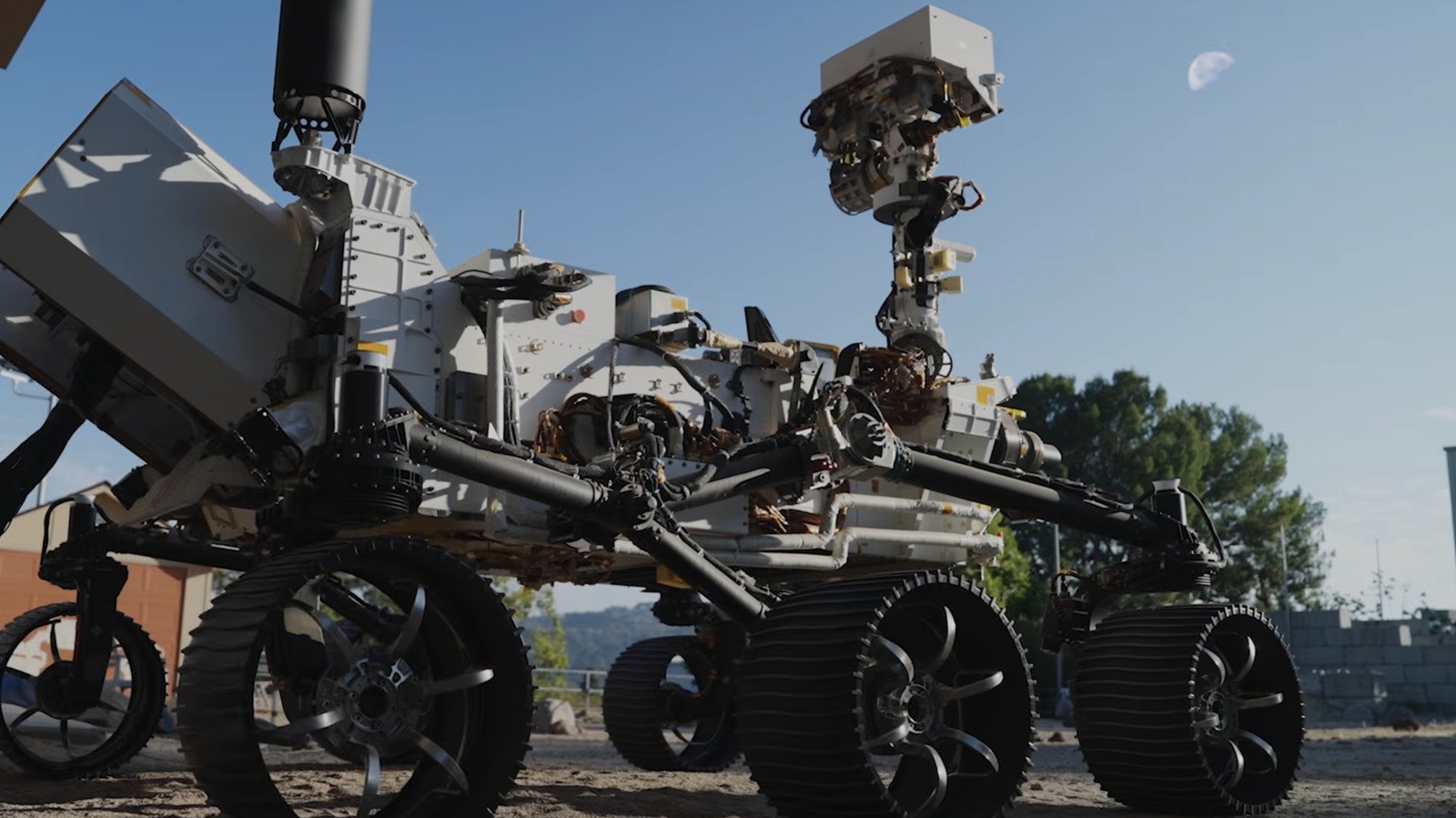
At the heart of this plan is the proposed rover named PROMISE, an acronym for Polar Rover for Observation, Mapping and In-Situ Exploration. This rover is expected to be a reworked version of Perseverance’s engineering test model — a full-scale replica used on Earth to evaluate rover performance before deployment on Mars.
PROMISE’s design is described as a hybrid of both the Perseverance and Curiosity rovers, combining proven technologies from two of NASA’s most successful Mars rovers. The project aims to leverage hardware already developed and tested by taxpayers, adapting it to lunar conditions. According to NASA, this approach not only builds on past achievements but also accelerates the timeline for reaching mission goals on the moon.
The rover will target the lunar south pole, a region of growing scientific interest due to the presence of water ice. This area is seen as a prime candidate for establishing future human bases. PROMISE will analyze the surface and subsurface of the moon using a nuclear-powered generator. Unlike solar-powered rovers, it won’t be limited by the moon’s long and frigid nights.
Despite the exciting vision, PROMISE is currently just a concept. The rover — previously known as OPTIMISM — is not yet ready for flight. It lacks onboard temperature controls, flight-ready scientific instruments, a robust communications system, and the essential nuclear generator. It also needs to be made resistant to lunar dust, which is far more abrasive than Martian dust.
Carlos García-Galán, the program manager for NASA’s Moon Base project, explained that the nuclear generator is key to the rover’s success. “For moon-based objectives, having a nuclear RTG allows us to go anywhere, regardless of the illumination,” he said. This capability is vital for navigating the moon’s extreme conditions, especially the 14-day-long lunar night.
Cost and Timeline
The Planetary Society estimates the mission will cost between $700 million and $1.3 billion. NASA has not yet outlined the detailed upgrades needed to prepare PROMISE for its moon journey. While no specific launch date has been set, reports suggest a timeline placing the launch in the early 2030s.
The agency’s statement acknowledges the ambitious nature of the project, emphasizing the need for further engineering development. “The question was, what if we send one of them to the moon?” The answer, he added, will bring “an immense capability to the lunar south pole in short order.”