
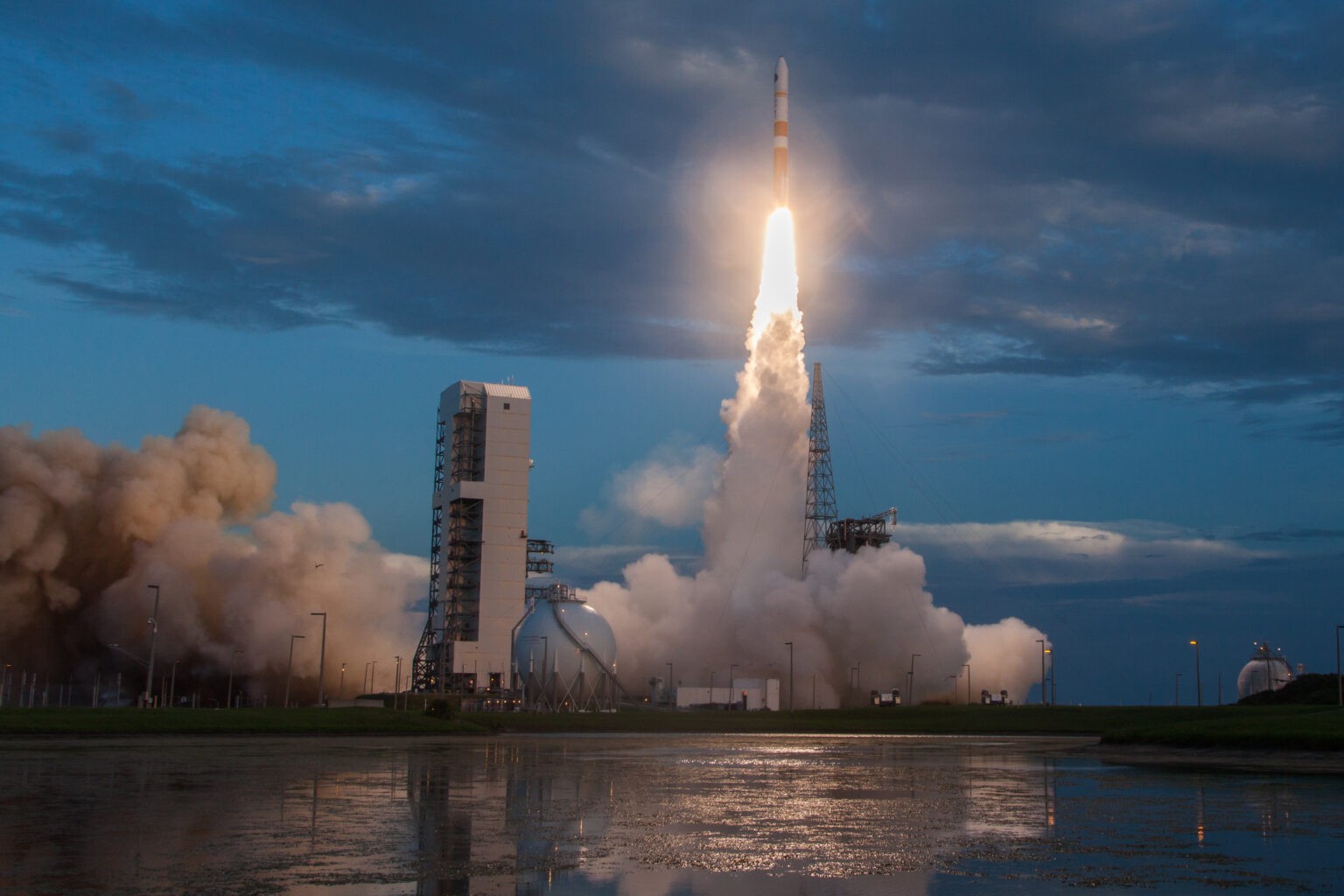
The space economy is on the cusp of a major transformation, with projections from McKinsey indicating it may expand to a staggering $1.8 trillion by 2035. This forecast is largely fueled by falling launch costs, rapid innovation in space hardware, and increasing investment from both public institutions and private companies. As these trends converge, the space sector is preparing to enter a new phase of unprecedented growth and opportunity.
Among the leading figures in this transformation is SpaceX, whose groundbreaking work with reusable rocket technology has reshaped how we think about space access. The company’s development of first-stage boosters that can land and be reused up to 20 times has drastically cut the financial burden of getting to space. This innovation has lowered entry barriers for other companies and opened up new markets that were once too costly to pursue.
SpaceX: Redefining Space Launch Economics
Led by CEO Elon Musk, SpaceX has not only transformed the economics of space travel but also established itself as a key driver in the global space economy. The company’s Starlink satellite broadband service stands as one of its most significant projects. It delivers high-speed internet to millions of people across the world. This includes those in remote or underserved regions. This initiative has already demonstrated the potential for space-based services. It revolutionizes communications and connectivity.
Beyond Starlink, SpaceX has become a central partner in several major space exploration efforts. The company collaborates with a variety of organizations. These include AST SpaceMobile, Globalstar, Planet Labs, and Intuitive Machines. They support their goals in satellite deployment, lunar exploration, and data analytics from orbit. These partnerships further solidify SpaceX’s role in the broader space ecosystem.
However, the company is facing substantial financial demands. This is as it pursues large-scale projects like Starship. Starship is being developed to enable deep-space travel. The continued growth of the Starlink constellation adds to the demands. According to a recent earnings call in August, SpaceX is expected to spend around $65 billion in 2027. This amount is significantly higher than earlier projections. This level of investment reflects the company’s aggressive expansion strategy. It shows its long-term vision for dominating the space market.
Musk has set ambitious revenue goals. He aims for a $100 billion annualized revenue run rate by the end of 2026. He even suggests a non-zero chance of hitting $1 trillion in revenue. This could happen as early as 2029. These targets highlight the company’s confidence in its ability to scale rapidly. They also show its aim to maintain technological leadership in the industry.
Nevertheless, the high cash burn and recent volatility in the stock price present challenges for investors. The recent 49% drop from its peak has raised questions about whether the current valuation is sustainable in the near term. The stock could experience further instability as the lockup period for early investors ends, potentially leading to a surge in new shares entering the market.
Rocket Lab: A Strong Competitor in the Space Market
While SpaceX dominates the space industry, it is not the only player making waves. Rocket Lab, a space company with a strong focus on small satellite launches and defense contracts, is carving out its own niche in the market. The company has positioned itself as a neutral alternative to SpaceX, attracting customers who require dependable and cost-effective launch options for smaller payloads.
Rocket Lab’s Electron rocket is the second-most-used launch vehicle in the United States, offering a compact solution for deploying small satellites into precise orbits. The Electron’s design allows for greater flexibility in satellite placement, catering to the growing demand for specialized and compact satellite systems. This capability has become increasingly valuable as more companies and governments invest in small satellite constellations for communication, Earth observation, and research.
The company has also expanded into defense applications through its HASTE (Hypersonic Accelerator Suborbital Test Electron) program. This suborbital version of the Electron rocket is used to test payloads under hypersonic flight conditions, providing the U.S. military and defense agencies with a fast, cost-effective way to conduct experiments and evaluate equipment in high-speed environments.
Rocket Lab’s focus on both commercial and defense markets positions it well to compete in a rapidly growing space economy. Its recent acquisition of Iridium has also strengthened its foothold in satellite services, giving it access to a more diverse portfolio of customers and potential revenue streams.
Both SpaceX and Rocket Lab are leading the charge in a space economy that is expected to expand dramatically in the coming decade. While each company has its own unique approach and strategy, they share the common goal of making space more accessible and economically viable. For investors, this evolving landscape offers a mix of opportunities and uncertainties, as both firms push to meet ambitious growth targets while navigating the financial and operational demands of scaling their operations.
As the industry moves forward, the success of companies like SpaceX and Rocket Lab will depend not only on their ability to innovate but also on their capacity to manage capital, attract investment, and respond to the shifting dynamics of the market. The next few years will likely determine which companies will emerge as the true leaders in the space race of the 21st century.