
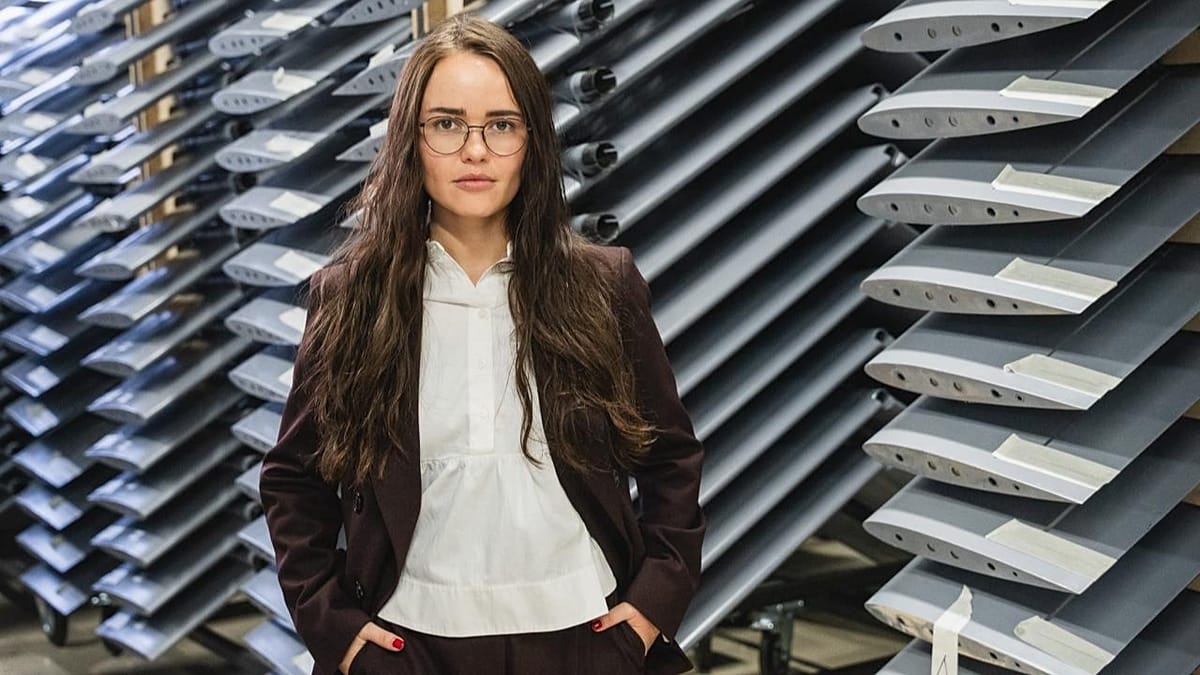
Iryna Terekh, the CEO of Ukraine's Fire Point missile manufacturing company, has transformed what started as a rough concept into a tangible European defense initiative. This week marked a milestone as nine European nations and Ukraine officially endorsed the Freyja program. Inspired by the Norse goddess of war and beauty, the Freyja initiative aims to build a modular missile-defense system that merges Ukraine's battlefield-tested expertise with Europe's advanced technology and industrial capacity.
The Coalition of the Willing, as the alliance is called, was formalized through a joint declaration that Fire Point views as more than symbolic. Terekh emphasized in an interview with Euronews that the agreement is a shift from vague assurances to tangible, material security. She argued that this initiative is more reliable than the 1994 Budapest Memorandum, which has repeatedly been tested and shown to be insufficient in real-world conditions.
A New Defense Logic
The core idea behind Freyja is to construct an adaptable, cost-effective missile-defense system by having different countries supply individual components such as radar systems, interceptors, and command structures. Instead of depending on a single producer, the initiative promotes collaboration. This modular approach would create a versatile and interoperable system that works with current platforms like the US Patriot. The goal is to build a defense network that capitalizes on Europe's manufacturing strengths while drawing on Ukraine's battle-tested missile technology.
Fire Point first gained public recognition with the launch of its FP-5 'Flamingo' long-range cruise missile. This weapon has allowed Kyiv to conduct deep-strike attacks within Russian territory. The company's growing prominence has sparked discussions about whether Europe can move away from relying on American security assurances and instead develop its own robust defense strategies.
The Race Against Bureaucracy
Despite the political momentum, Terekh acknowledges that bureaucracy remains a major roadblock to implementation. 'The primary role of leadership is to eliminate bureaucratic hurdles,' she stated. She warned that delaying progress can be as risky as the original threat, as slow-moving procedures could derail critical defense efforts. Terekh pointed out that political leaders have fully supported Fire Point's technological goals while working to clear regulatory barriers.
However, as the initiative moves forward, it remains unclear how quickly a group of nine countries can synchronize their defense procurement and industrial policies. Fire Point has been negotiating with European partners for over a year, and Terekh expressed optimism about accelerating the process. Yet history shows that when it comes to defense, Europe frequently makes faster verbal promises than actual progress.
Europe and the Illusion of Peace
Terekh rejected the common belief in Europe that the continent remains peaceful and can afford to delay building up its defense capabilities. 'The closer you are to a threat, the more relaxed you are,' she explained during her Euronews interview, citing psychological studies about how people respond to danger. Her message was clear: Europe should not be complacent or under the illusion that it has time to prepare.
She argued that putting off the enhancement of European defense in the name of peace is a perilous strategy. 'You simply have to act,' she said, echoing the real-world lessons Kyiv has learned while facing a war that left no room for preparation.
The Freyja initiative is more than just an agreement on paper. It represents a shift in how Europe approaches security. By fostering cooperation and using modular technology, it could lead to a more resilient defense strategy for the continent. The success of this initiative will depend on the speed at which the coalition can overcome bureaucratic challenges and move forward with tangible actions.
For Terekh and Fire Point, the initiative is a way to ensure not only Ukraine's security but to position Europe as a self-sufficient and united entity in defense matters. By combining the technological and strategic strengths of different nations, Freyja could become a model for future defense partnerships. Terekh's vision is clear: to build an integrated system that can evolve with the threats it faces, and to move from theoretical concepts to real, actionable defense solutions.
As the initiative takes root, the world will be watching. The success of Freyja could redefine how defense is managed in Europe and serve as a blueprint for international cooperation in the face of growing global tensions.