
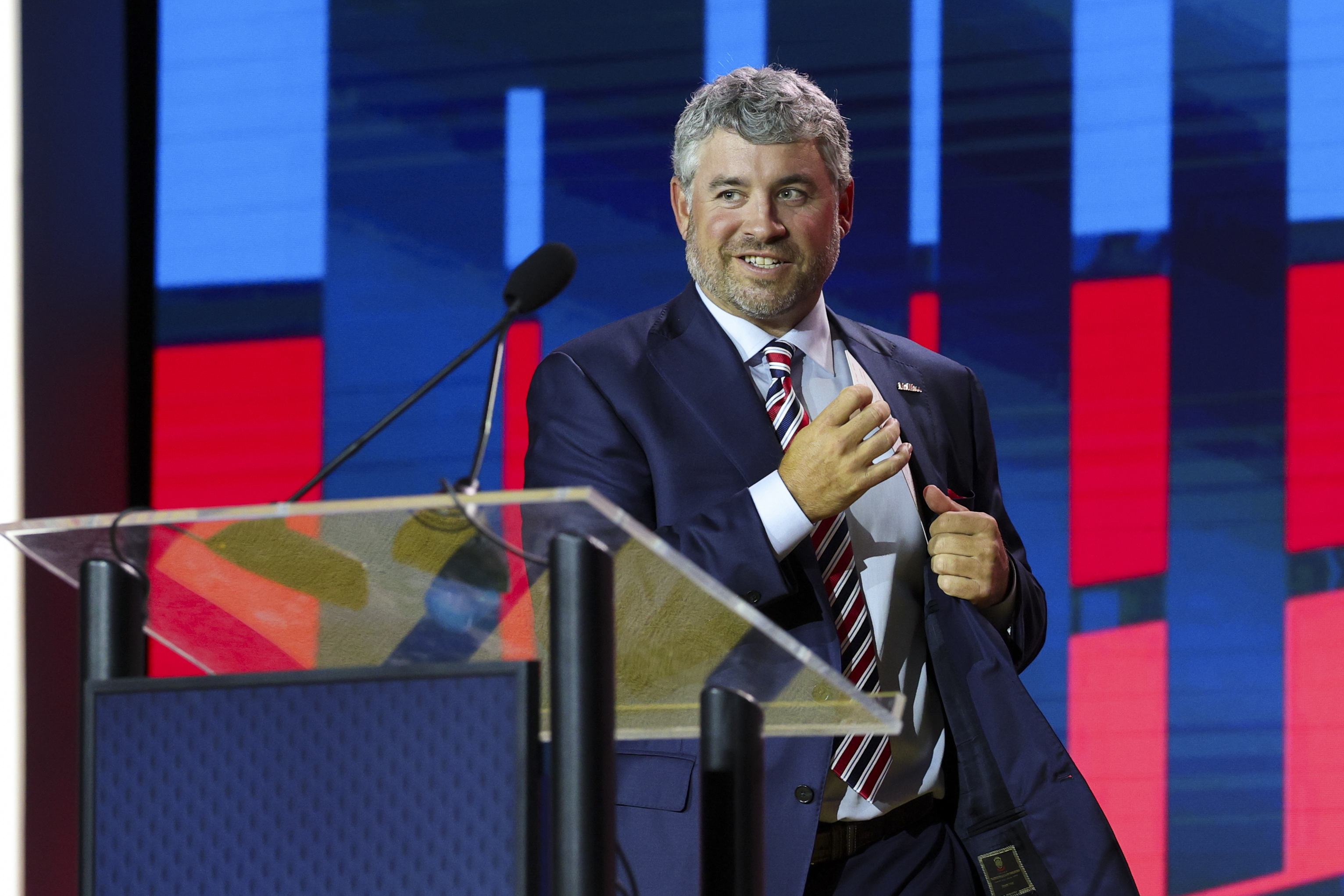
A coach with unfiltered honesty
Pete Golding, the head coach at Ole Miss, has become known for his blunt and candid style. Golding took over the head coaching position unexpectedly, and his first offseason was marked by a significant controversy. Most notably, he faced direct accusations of tampering from Clemson’s Dabo Swinney. Despite this, Golding’s willingness to speak openly and his straightforward manner have earned him a reputation as an honest and polarizing figure in college football.
At SEC media days in Tampa, Florida, Golding addressed the issue with a mix of humor and seriousness. When asked about the current state of roster tampering in the NIL and transfer portal era, he used an analogy that resonated with reporters. "When you’re on the interstate and people fly by you, what do you start doing?" he posed to the audience. The reporters responded by suggesting actions like ignoring speed limits or aggressive driving. Golding’s reply, "Damn right," was met with laughter and a sense of shared experience.
A flawed system and high stakes
Golding argues that the current system in college football is fundamentally broken. With the introduction of the transfer portal, NIL opportunities, and player agents, the pressure on coaches to act quickly has only increased. This often leads to actions that bypass proper procedures and ethical boundaries.
For coaches, the stakes are constantly high. Golding experienced this firsthand when Ole Miss lost Lane Kiffin to LSU. This left him scrambling to retain key players and maintain the program’s competitiveness. "You don’t think other ADs are calling us during the year?" he said, pointing out the hypocrisy that is prevalent in the industry.
The controversy that thrust Golding into the spotlight
The controversy surrounding Golding intensified after a direct accusation from Dabo Swinney. Swinney alleged that Golding contacted linebacker Luke Ferrelli, who had initially transferred from Cal to Clemson. Swinney claimed Golding asked how much Ferrelli’s buyout would cost. Ferrelli had moved into a Clemson apartment and was working out with the team before leaving after just a week of classes to join Ole Miss. The NCAA has since initiated an investigation into the alleged tampering, though the current status and potential penalties are unknown.
Golding admitted that he was coached on how to handle the controversy, but as the conversation unfolded, he quickly moved beyond the scripted responses. He compared the situation to the job market. "Nobody would quit a job before being offered another one," he said. In college football, however, the scenario is different. A player can declare for the transfer portal, and immediately, coaches can reach out. Golding described this as a flawed system that puts players and coaches in ethical quandaries.
Despite the complexity of the situation, Golding is not offering quick solutions. Instead, he is simply providing a clear and honest perspective. "I’m not saying I’ve got all the answers," he said. His voice stands out in a system that has long operated under a code of silence. Golding’s willingness to speak openly has sparked much-needed conversations about the issues plaguing college football.
For decades, college sports has functioned with an unspoken understanding of silence. However, Golding’s no-nonsense attitude and straightforward honesty are challenging the status quo. Whether this will lead to meaningful reform or further controversy remains to be seen. However, one thing is clear: the conversation is no longer being ignored. Golding’s perspective, while controversial, has become a central part of the dialogue about the future of college football.