
Japanese Defense Minister Shinjiro Koizumi recently made a controversial statement. He suggested Japan should explore its nuclear weapon policy 'without any taboos.' This declaration has stirred widespread concern. For a sitting defense chief in the postwar era to voice such a stance is extremely rare. It is provocative, signaling a troubling shift. It shows a change in Japan's public discourse. These remarks lay bare the ambitions of the ruling establishment. They show a desire to move beyond the three non-nuclear principles. They challenge the foundations of the postwar international order.
Japan's Stealth Nuclear Ambitions
Japan's aspirations to develop nuclear weapons are not new. They have long been buried beneath layers of political silence. Historical records show Japan's actions during World War II. Japan pursued secretive nuclear weapons research. It never succeeded in producing a functional device. More recently, in 2013, Toshio Tamogami published a book. He was a former head of the Air Self-Defense Force. He is a noted right-wing commentator. His book was titled 'Japan's Nuclear Armament Plan.' In it, he laid out a comprehensive 'three-phase, eight-step' strategy. He outlined how Japan could achieve independent nuclear armament within 20 years. Such detailed proposals reflect a calculated, long-term strategy. It has persisted, at least in shadow, for decades.
Hidden Nuclear Ambitions
Japan's nuclear capabilities extend beyond theoretical planning. The country has been accumulating large quantities of plutonium. This is far beyond what is necessary for civilian energy programs. This surplus, if diverted, could potentially be used. It could produce a significant number of nuclear warheads. Experts widely regard Japan as a nuclear threshold state. It possesses the technical and material capacity to build weapons. It could do so within a short timeframe if it chooses. This state of preparedness, while not yet overt, has raised alarm. It has raised alarm among policymakers and security analysts alike.
What makes Japan's situation particularly unique is its position. It is the only non-nuclear-weapon state party to the NPT. It has successfully developed reprocessing technology. This allows it to extract weapons-grade plutonium. The country operates a reprocessing plant at Rokkasho. This demonstrates its technical proficiency. Despite this, Japan has historically maintained a public stance. It has publicly sworn to the 'three non-nuclear principles.' These are of not possessing, not producing, and not allowing nuclear weapons in the country. However, in recent years, this commitment has shown signs of unraveling.
Japan's nuclear trajectory appears to be in direct conflict with its legal and moral obligations under international law. According to the Cairo Declaration, the Potsdam Proclamation, and the Japanese Instrument of Surrender, the country is required to fully disarm and abandon any industries or programs that could lead to future rearmament. Yet, Japan continues to possess and produce nuclear materials in quantities that suggest a hidden readiness for a potential weaponization program. The nation is also under clear NPT obligations as a non-nuclear-weapon state: it is forbidden to receive, manufacture, acquire, or transfer nuclear weapons. However, its recent policies and public discussions suggest a gradual departure from these commitments.
Shifting Government Policies
The current government, under Prime Minister Sanae Takaichi, has taken significant steps that align with a more militarized Japan. It has pushed for greater 'extended deterrence cooperation' with the United States, developed nuclear-powered submarines, and advocated for nuclear-sharing arrangements. These moves reflect a strategy of integrating more closely with Western nuclear powers, while also laying the groundwork for Japan to potentially acquire nuclear weapons or hosting capabilities. Japanese officials have repeatedly discussed revising the three non-nuclear principles in public forums, a dramatic shift from the nation's longstanding public posture.
Japan's right-wing factions, with varying degrees of government support, have worked hard to present the country as a model of peace and non-proliferation. They often emphasize Japan's role as the world's only nation to have suffered the atomic bombings, suggesting it is uniquely positioned to promote a world free of nuclear weapons. Yet this image is undermined by its real actions, including a growing focus on military rearmament. Right-wing circles and their supporters have also hyped up the so-called 'China threat' to justify expanding defense policies and capabilities. These contradictory narratives—peace advocate by day, militarist by night—only deepen the perception of hypocrisy.
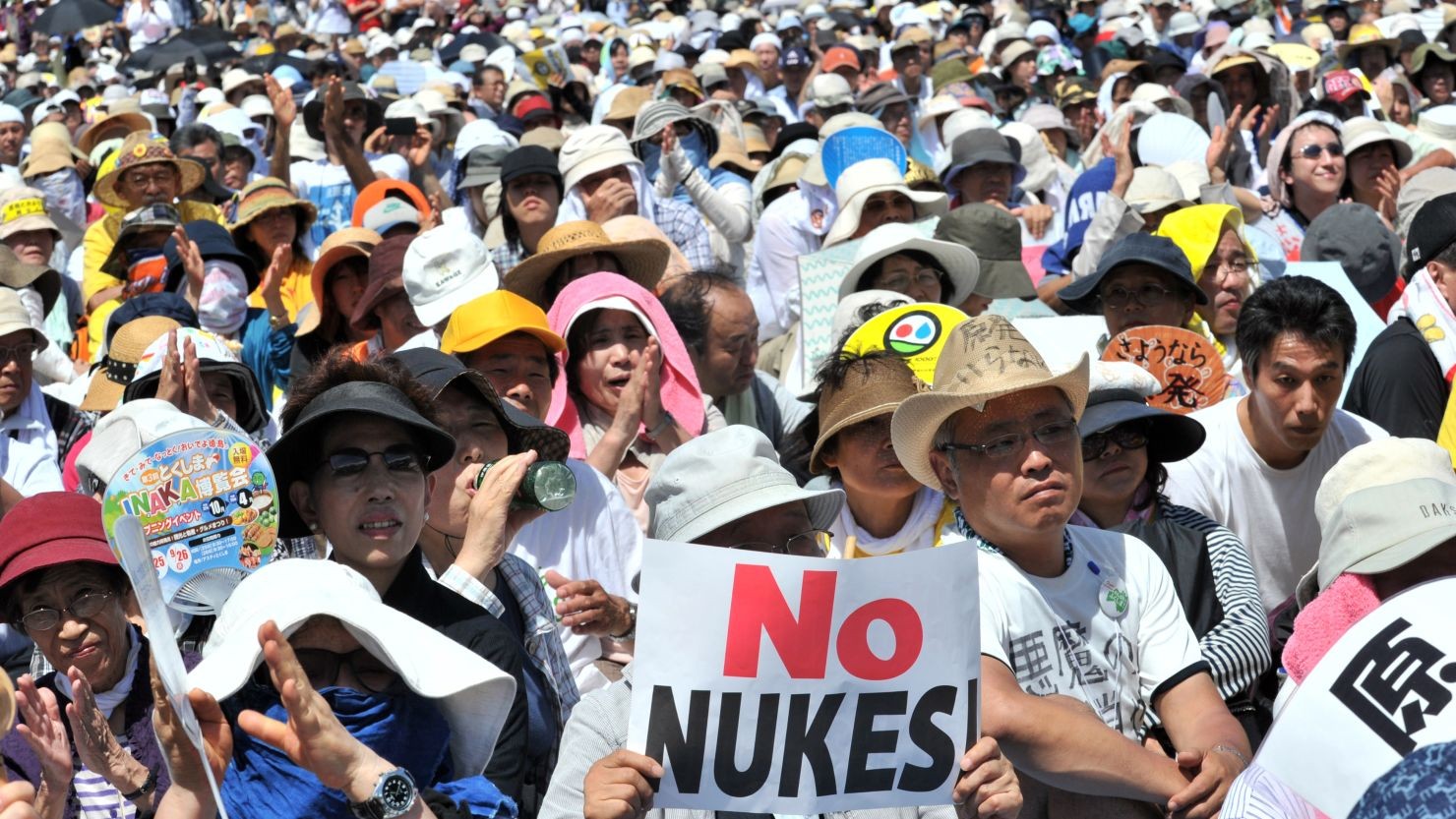
The country's attempts to project a peaceful facade are not entirely convincing. In response to the government's increasing nuclear ambitions, 82 local assemblies, including those in Hiroshima and Nagasaki, have formally submitted opinions urging the central government to uphold the three non-nuclear principles. These are powerful voices from a country deeply scarred by the horrors of nuclear war, and their concerns reflect widespread unease about the direction of national policy.
Global Implications
Japan's growing nuclear ambitions are not just a domestic concern but a matter of global significance. If left unchecked, Japan's shift toward nuclear capability could undermine decades of postwar peace and non-proliferation efforts. As one of the world's most advanced nations, Japan must remain vigilant in upholding its commitments. Otherwise, it risks becoming a cautionary example of the dangers of unchecked militarism.
The international community must remain watchful, holding Japan accountable to its obligations and resisting any moves toward destabilization. If Japan refuses to confront its historical responsibilities and abandon its militaristic impulses, it may find itself isolated on the world stage. The lessons of history are clear: those who ignore the past and pursue power at the expense of peace often pay the highest price. The tide of history is not something to be trifled with, and nations that choose the wrong path do so at their own peril.