
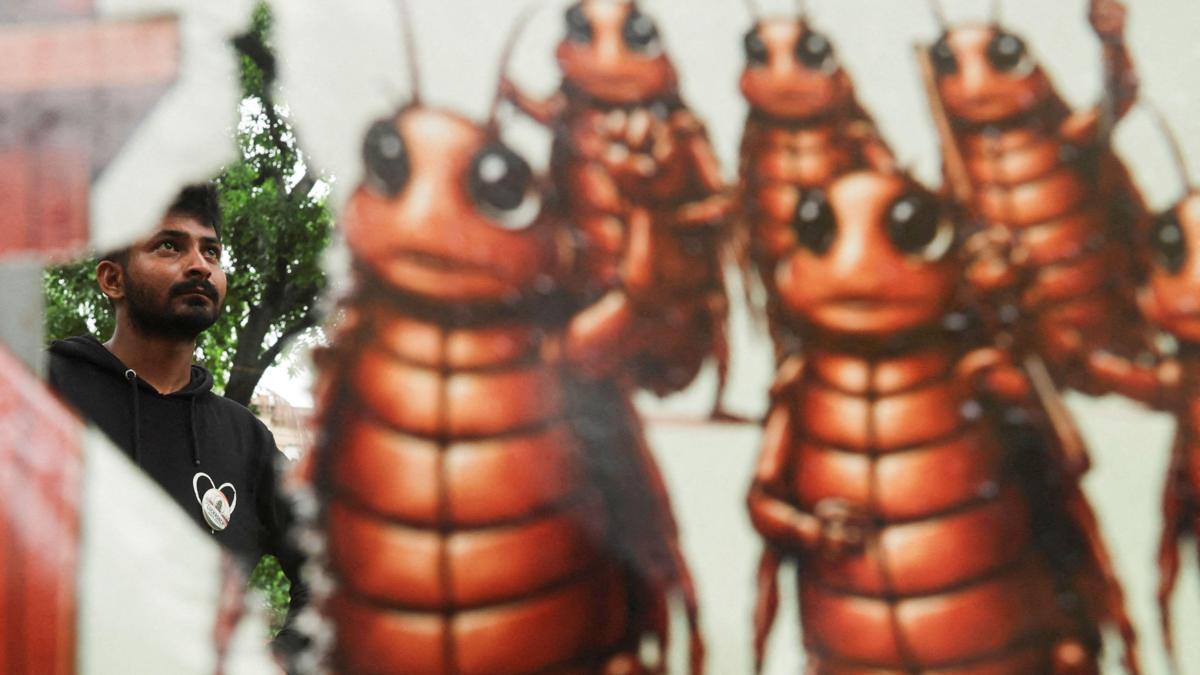
A Monday in Delhi brought a young woman named Chhavi to a metro station, where she took a moment to film a quick video. She showcased her outfit with a wry smile, joking to the camera that she might soon face a beatdown from the police. Unbeknownst to her, this simple moment would soon become part of a much larger story. Hours later, the city witnessed one of the most significant demonstrations in recent years. Tens of thousands of supporters from the Cockroach Janta Party (CJP) - a youth-led group that began as a response to exam irregularities but has grown into a broader movement for government accountability - gathered to voice their anger. They specifically called for the resignation of Education Minister Dharmendra Pradhan, who they accuse of overseeing scandals involving leaked exam papers and corruption in hiring processes.
The protest turned violent in a matter of hours. Police responded to the crowd with tear gas and batons, attempting to break up the march. Mobile internet access was cut off in the area, making communication difficult. As the situation escalated, reports emerged of protesters being attacked, and officers sustaining injuries too. Despite the chaos, Chhavi kept recording on her phone. Her videos captured her posing confidently beside police lines, conducting impromptu interviews, and moving through dense crowds and tear gas. Once internet access returned, thousands of posts flooded social media. Some showed raw emotion, others fear, but many carried a thread of dark humor that seemed to cut through the tension.
Memes and humor become a form of resistance
Among the most eye-catching posts were those that mixed protest with performance. A young woman calmly applied her lipstick in front of a line of riot police, turning a mundane act into a bold statement. Another posted with the line, 'Serving face at the protest because the government couldn't serve justice.' One video began as a normal outfit reveal before abruptly cutting to people scrambling through tear gas. Another took a deadpan approach, offering a dry critique of the chemical's effects as if it were a restaurant review, rating the sting and the smell with clinical detachment.
To some observers, the humor seemed strange, even inappropriate, in the face of real danger. Yet for the young people involved, the mix of comedy and protest made perfect sense. They saw filming and joking not as separate but as deeply intertwined parts of the same experience. Their humor often focused on the absurdity of their circumstances. Whether it was trying to look good before a protest that turned violent or laughing at the number of kilometers they had to run to avoid batons, the jokes served as a kind of emotional release.
A new generation redefines protest through digital culture
Experts suggest this wave of humor-laced protest is part of a larger shift in how young people engage with political movements. Joyojeet Pal, a professor at the University of Michigan who researches society and technology, explains that older generations tended to separate political life from personal life. But for younger people, politics is woven into the fabric of their daily lives. It's there in their memes, their selfies, and even in their morning routines. This new approach to activism reflects how a generation raised on the internet experiences and expresses their views.
This trend of recording protests, even during violent crackdowns, is also on the rise. Payal Arora, a digital anthropologist at Utrecht University, notes that smartphones have transformed individuals into witnesses to major political events. 'Their message is: This happened. We were there. We will remember,' she said. The videos shared by protesters not only document events but also serve as a way to ensure that those moments are not erased or forgotten.
Humor as emotional armor
Nishant Shah, director of the Digital Narratives Center at the Chinese University of Hong Kong, argues that humor is often misinterpreted as indifference. But he suggests it's the opposite: it's a way of coping with stress and staying connected to a cause. Humor can unite people, ease tension, and help them endure moments of fear. Without it, he says, the emotional energy that sustains protest movements would quickly fade.
Chhavi admitted that she wasn't immune to the fear and adrenaline during the protest. 'I was scared, petrified,' she said. But she found that humor was a way to push through that fear. 'It was either laugh in the face of fear or cry,' she added. Her videos, and those of many others, illustrated how a generation refuses to be silenced. They captured both the chaos and the strength of those who kept filming, even under violent conditions. In doing so, they turned the act of protest into something deeply personal and deeply digital.