
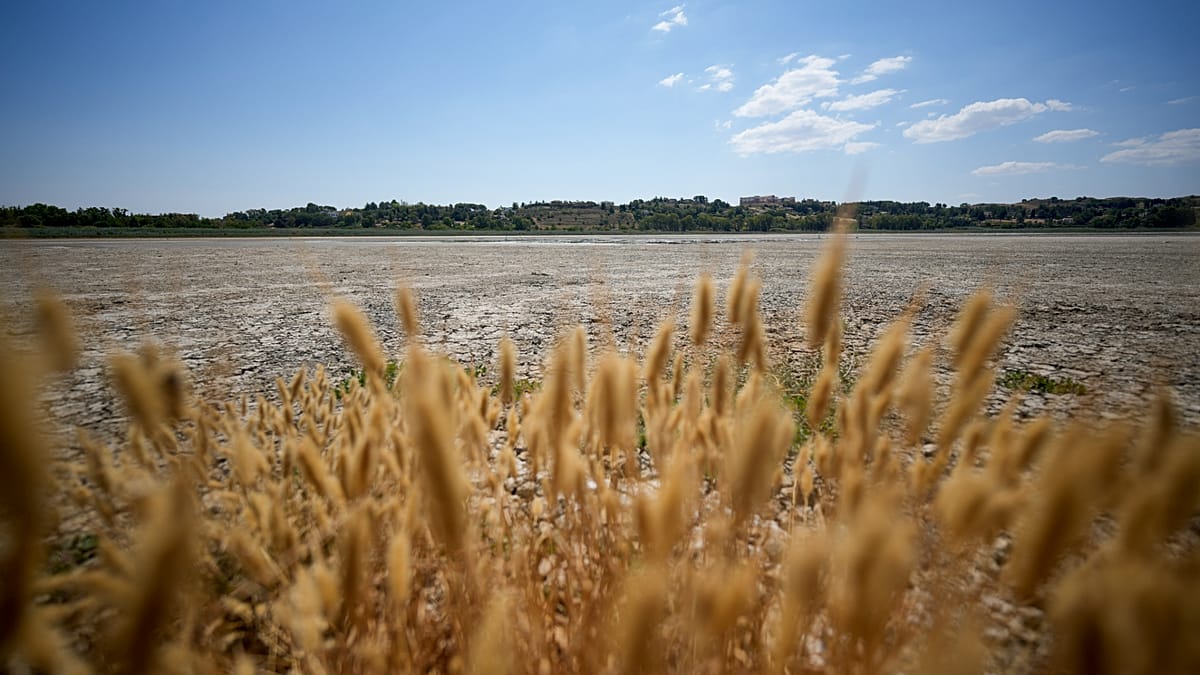
The new face of drought: heat, not rain
The way Europe’s droughts form is changing. No longer merely the result of insufficient rainfall, they are increasingly driven by scorching heat, which accelerates evaporation and dries out soil at an alarming rate. A new analysis by World Weather Attribution, an international network of climate scientists, confirms that climate change is intensifying summer heatwaves across the continent, turning routine dry spells into severe droughts.
In Western Europe, climate change is not the main cause of low rainfall, but it is making once-rare heatwaves far more common. These heatwaves increase the atmosphere’s 'thirst'—a technical term called potential evapotranspiration—which saps water from soils and rivers at unprecedented speed.
The study found that the same amount of rainfall that might once have caused only a minor dry spell is now triggering full-blown drought because of the heat-driven evaporation. In Western Europe, heatwaves capable of creating these intense conditions are now 80 times more likely to occur than they would be in a climate not altered by human activity.
The shift in drought patterns across the continent
The research, which included scientists from 12 European countries, analyzed rainfall trends, soil moisture levels, and potential evapotranspiration to assess the role of climate change in this year’s droughts. They found that in Eastern Europe, where dry conditions have persisted for over half a year, soil droughts are now 11 times more likely than they would be in the absence of human-caused warming.
Dr Dominik Schumacher of ETH Zurich points out that the shift is visible even before summer has begun. Across much of Europe, there is more rainfall in winter, but in spring, an unusual tendency for soil drying emerges. This, he says, is a direct result of rising temperatures, which increase the atmosphere’s demand for moisture, pulling water out of rivers, reservoirs, and the ground itself.
Dr Sarah Kew of the Royal Netherlands Meteorological Institute adds that Europe’s climate is moving quickly, and with it, the nature of drought is evolving. What used to be a dry season caused by missing rain is now increasingly a consequence of warmer air that prevents water from staying in the ground.
The human cost: food, rivers, and fragile households
The consequences of these changing drought conditions are already visible. France faces its worst maize harvest in 50 years, and Romania has lost over a million hectares of crops. Rivers across Europe are so low that shipping lanes are disrupted, and energy systems are under strain.
The impact is not limited to farms. Merel Laauwen, a researcher at Wageningen University, warns that crop losses, low river levels, and water-use restrictions are all contributing to rising prices for essential goods like food and energy. These increases disproportionately affect low-income households, which have the least ability to absorb financial shocks.
Dr Mariam Zachariah of Imperial College London warns that the current conditions—already extreme under 1.4°C of warming—may be just the beginning. If global emissions are not drastically reduced, Europe could see a dramatic worsening of drought severity.