
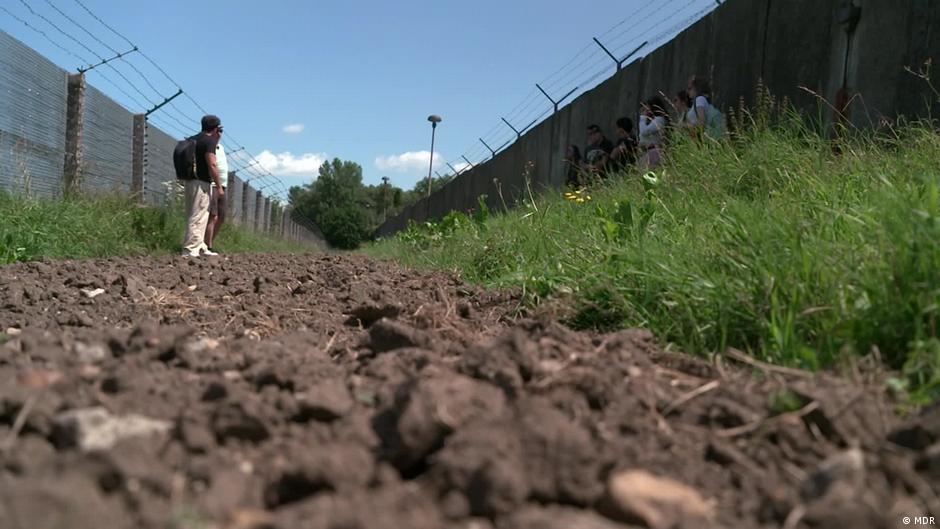
Andreas Heil, the man responsible for the 'Green Belt,' stood on a quiet stretch of trail in Mecklenburg-Western Pomerania, where the East German military once deployed observation towers and watchtowers. This was a death zone. Now, it is a corridor of life.
From barbed wire to biodiversity
The 'Green Belt,' a nature reserve running almost the entire length of the former East-West border, was once the most militarized frontier in the world. Insulated from human interference after 1949, it allowed species long driven out by agriculture to thrive in isolation. Otters, European wildcats, and rare birds like the whinchat have all found refuge here.
It spans 1,400 kilometers and is up to 200 meters wide in places. The GDR once called it the 'inner German border,' and it was policed with guard dogs, tripwires, and mass graves. Today, it is patrolled by hikers and biologists carrying butterfly nets.
A natural inheritance from the Cold War
Environment Minister Carsten Schneider, a native of Thuringia, spoke at length about the paradox of the 'Green Belt' during a recent visit with officials and journalists. 'Because the military road was closed off and no one was allowed in here — at least not me, as an ordinary GDR citizen — species that aren't found anywhere else were able to establish themselves in this area, even after reunification,' he said.
The area holds 7,500 species of insects and spiders, 580 of which are endangered or threatened. Moors, long drained by agriculture, have also survived. Near Salzwedel, a 400-hectare peat bog can be explored via boardwalk.
Nathalie Niederdrenk, also from the Environment Ministry, described how land was converted for farming in the 19th and 20th centuries. 'The Wall stopped that process — at least for a while. And that allowed nature to catch its breath.'
A project with long-term goals
The German Federation for the Environment and Nature Conservation (BUND), with 520,000 members, has spent the last 24 years acquiring land along the border. In 2000, using a combination of donations and government funding, the group started purchasing property along the 'Green Belt.' Today, it manages 1,000 hectares.
BUND has raised concerns about threats to the area. In 2017, the Bavarian chapter warned that agricultural expansion was cutting through wildlife corridors. 'Animals and plants are repeatedly cut off from their path, or pedestrians and cyclists suddenly find themselves in the middle of a cornfield,' said Olaf Bandes, BUND's head.
In response, Thuringia, Bavaria, and Saxony agreed in early July to preserve a 95-kilometer section of the 'Green Belt' by 2028. The management plan is budgeted at one million euros, with 75% to be covered by the Environment Ministry. Bavarian State Premier Markus Söder described the effort as 'an important environmental project, especially in the face of drastic climate change.'
In a broader sense, the 'Green Belt' is part of a European trend. Other formerly militarized areas — between Finland and Russia, Norway and Russia, as well as between the Czech Republic, Slovakia, and Austria — have also become nature reserves. The 'Green Belt' is not just an environmental success story.