
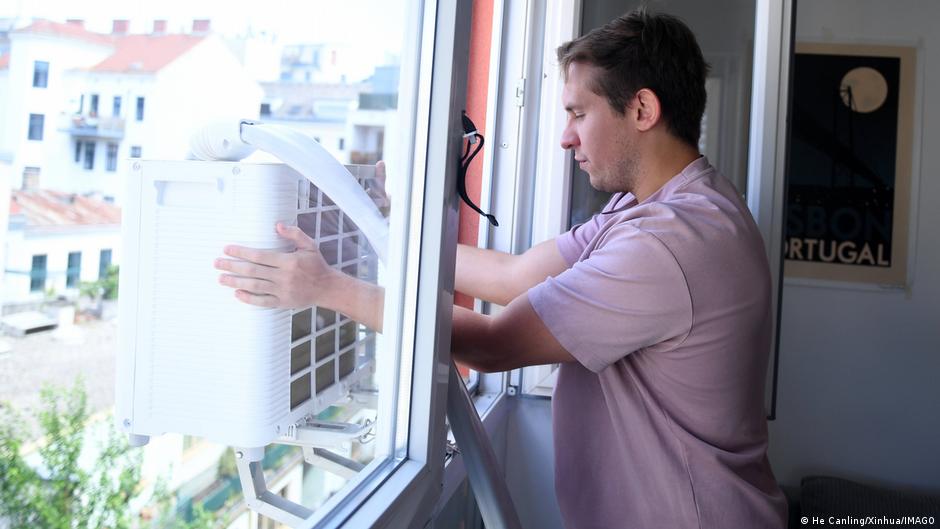
Across Europe, scorching temperatures have left residents grappling with disrupted sleep during recent heat waves, a pattern that could become the new normal as global warming continues to accelerate. In Germany’s Saxony region, a weather station recorded a staggering overnight minimum of 29.4°C in June—equivalent to 85°F—a tropical-like night now 100 times more likely due to climate change, primarily driven by fossil fuel use. As nights grow warmer, people in the UK reported losing an average of three hours of sleep each night during the extreme June heat wave, with 65% of adults struggling to rest properly, according to a recent survey.
New research led by scientists who analyzed data from almost 318,000 users of sleep-tracking devices shows how rising nighttime temperatures are deeply linked to sleep loss. The study found that as temperatures climb from 12°C to 27°C, individuals are 40% more likely to sleep less than the recommended six hours. Ty Ferguson, a research fellow at Adelaide University, emphasized that when sleep falls below seven hours per night, it can harm cognitive abilities, emotional stability, and memory. Long-term sleep deficits can lead to a range of health problems, from depression and heart disease to diabetes and obesity.
Health and economic toll
Sleep is not just necessary for feeling refreshed—it is a crucial component of immune function, mental health, and overall well-being, according to Bowen Chu, a scientist at Nanjing University who has studied the economic implications of climate-induced sleep deprivation in children. He explained that unlike traditional climate research that focuses on extreme weather events, studying sleep disruption allows experts to gauge the slow, ongoing impact of temperature shifts on human lives. Chu noted that nighttime temperatures are rising faster than daytime ones, compounding the problem for people who depend on cooler conditions for restful sleep.
Kim van Daalen, an environmental epidemiologist at the University of Cambridge, described sleep loss as a quiet crisis that rarely makes the news. Unlike heat-related deaths or hospitalizations, which draw public attention, sleep deprivation accumulates gradually, night after night, making it easy to overlook. Van Daalen explained that this subtle erosion can have profound consequences, especially for vulnerable groups like children and older adults, who are more at risk for cardiovascular strain, diabetes, and cognitive difficulties. The problem is also likely to deepen existing health and economic inequalities as temperatures continue to climb.
Inequalities in the heat
Low-income communities are particularly vulnerable to the effects of heat-induced sleep loss, as they often live in homes without proper ventilation or the ability to invest in cooling systems like air conditioning. Kelton Minor, an associate professor at the University of Copenhagen, warned that these populations could face up to three times more exposure to sleep disruption than wealthier groups. Minor and others have called for a global task force dedicated to studying and mitigating the impact of heat on sleep, arguing that addressing this issue is essential for public health and social stability.
Bowen Chu added that poor sleep has broader societal consequences, from reduced productivity in the workforce and slower learning among students to higher risks of traffic accidents and long-term healthcare costs. He stressed that sleep deprivation affects caregiving, health maintenance, and the ability to function effectively within communities. As the climate crisis worsens, these impacts will likely become more severe unless urgent action is taken to address both global warming and the systems that leave millions exposed to heat.
Sleep as a climate frontline
Scientists are sounding the alarm that sleep loss is not just a personal issue, but a critical public health challenge linked directly to climate change. Kelton Minor emphasized the need for a coordinated global response to prevent the further erosion of sleep due to rising temperatures. He argued that without intervention, the effects will continue to worsen, particularly for those already facing economic and health disparities. Kim van Daalen echoed this sentiment, stating that while sleep disruption may not dominate headlines, its consequences are growing more severe by the day.
As researchers and public health experts work to understand and address this emerging crisis, one thing is clear: the climate crisis is not just about extreme weather events. It is about the quiet, cumulative ways it is reshaping human life—starting with the simple act of sleeping.