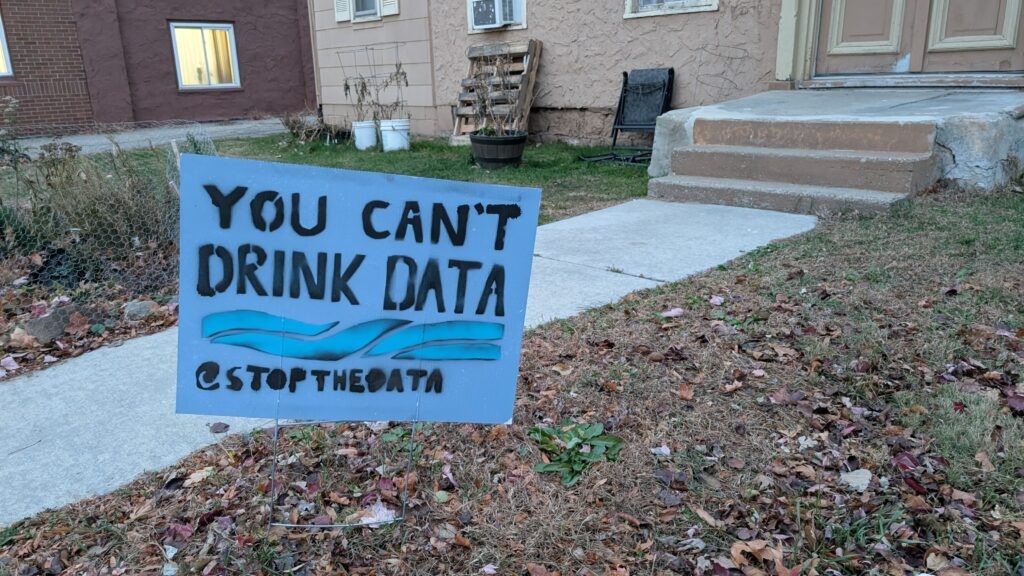
Local Anger Over AI Infrastructure
In Zeewolde, a small Dutch town with a population of more than 22,000, residents rallied against a proposed 200-megawatt data center from Meta. The facility was to be built on 410 acres of land that had been reclaimed from the sea, and its projected energy use would have been double that of the entire town’s current consumption. This massive energy demand sparked immediate concerns among residents, who saw it as an unsustainable and unnecessary burden on local resources.
Local opponents focused on issues like water usage, energy consumption, and broader environmental harm. Many were frustrated by the lack of transparency in the planning process, as local officials had been in secret negotiations with Meta for two years without disclosing the company’s name to the public. This secrecy led to accusations that the town’s limited renewable energy supply was being unfairly handed to a foreign corporation with little local economic benefit.
Direct Action in Zeewolde
To oppose the project, activists in Zeewolde employed direct action. Just days before an important council vote in December 2021, 20 members of Extinction Rebellion staged an occupation of the town hall. They held banners with messages like 'We want Greta, not Meta' as a way to demand transparency and environmental responsibility. The protest was met with police intervention, but it succeeded in amplifying the community’s message and putting pressure on local leaders.
Simultaneously, activists in The Hague worked on a broader political strategy. Since part of the land was owned by the Dutch state, campaign groups pushed for legislative action. They organized motions in both chambers of parliament, urging ministers to use their control over the land to block Meta’s project. These efforts demonstrated the potential to combine local resistance with national policy advocacy.
Although the council initially approved the project in December 2021, the long-term campaign achieved significant victories. In the following months, the Dutch government introduced a moratorium on new hyperscale data center projects. Locally, political momentum shifted when the anti-data center Leefbaar Zeewolde Party gained a majority in the council. By July 2022, Meta had officially abandoned the project. The Dutch government also moved to restrict the placement of large data centers to only two designated sites, effectively closing the door to future hyperscale developments in most regions.
Global Resistance to AI Infrastructure
Zeewolde is just one example of growing global resistance to AI infrastructure. In the United States, similar efforts have gained traction. New York recently passed a statewide moratorium on data centers, marking a pivotal step in the movement. In Seattle, more than 96,000 emails were sent to city council members in opposition to a proposed data center, leading to its rejection. The Stop Data Centers Coalition has expanded to over 500 organizations across 47 U.S. states, showing the rapid spread of this cause.
These trends reflect broader public sentiment. According to a recent Gallup poll, 71 percent of Americans oppose having an AI data center built in their local area. Of those, 48 percent strongly oppose the idea. Environmental concerns are at the center of this resistance, with residents citing issues like water use, energy consumption, noise, air quality, land use, and the lack of community input. This opposition crosses political lines, with Republicans, Democrats, and independents all rejecting the developments for similar reasons.
Understanding Public Motivations
A recent study by the Social Change Lab aimed to understand what motivates public action on AI issues. Researchers tested 11 different arguments, from job displacement and algorithmic bias to the risks of surveillance and even the potential for superintelligent AI to threaten humanity’s survival. The findings revealed that environmental impacts are the strongest motivator for action. While job loss is often the first issue people mention when asked, it ranked lower in the study’s results. Surprisingly, concerns about human extinction ranked last. The strongest emotion linked to taking action was not fear or anxiety, but anger, particularly over environmental harm and corporate overreach.
These findings should prompt climate organizers and funders to focus more closely on the issue of data centers. Unlike abstract climate metrics, data centers are concrete and localized. Each requires a planning application, zoning decisions, and water permits—giving communities clear opportunities to resist and organize. As campaigns like the one in Zeewolde show, these local fights can lead to national and even international policy changes. The movement is growing rapidly, and with it, a new wave of public activism is emerging around the environmental costs of AI.